
Whenever I arrive in a city for the first time, there’s one activity I almost always look for before I book anything else: a free walking tour.
Whether I’m spending a weekend in a new destination or several days exploring somewhere I’ve always wanted to visit, I find that a walking tour is one of the quickest ways to get my bearings and understand the city’s character. Rather than diving straight into museums, attractions or shopping, I like to start by learning how the city fits together.
If you’ve never taken one before, here’s why I think free walking tours deserve a place in every traveller’s itinerary.
1. They help you get your bearings
Arriving in a new city can be overwhelming. Streets have unfamiliar names, public transport can seem confusing, and the city may be larger or more complex in its layout than you expected.
A walking tour gives you an introduction to the city’s footprint. You’ll quickly learn where the main attractions are, how different neighbourhoods connect and which areas you might want to revisit later. By the end of the tour, the area you’ve explored usually feels much more familiar and far less intimidating.
Instead of wandering aimlessly on your first day, you’ll have a clearer idea of how to make the most of the rest of your trip. Thanks to Free Walking Tours Curacao, I quickly got the lay of the land in Willemstad during my August trip.

2. You learn the stories behind the landmarks
It’s easy to admire beautiful buildings or take photographs of famous statues. Understanding why they matter is another thing entirely.
One of the greatest advantages of a walking tour is having a knowledgeable local guide explain the history, architecture, and stories that bring a destination to life. You’ll often hear fascinating anecdotes, learn about important historical events, and discover details that you would probably miss if you were exploring on your own.
Those stories are often what stay with you long after the trip is over.
3. You’ll discover places you might otherwise miss

Wandering the streets and alleyways of Otrabanda was simple enough but would I have come across this cute photo op on my own? Unlikely. Guidebooks and travel websites usually highlight the same attractions, but local guides often introduce visitors to hidden gems that don’t always make the top ten lists: the mural by a local artist, the hole-in-the-wall family-run restaurant.
You may discover a quiet square, an independent café, an impressive viewpoint, or a local market you hadn’t considered visiting. These recommendations can end up becoming some of the highlights of your trip.
Even if you’ve done plenty of research beforehand, a local perspective often reveals a different side of the city.
4. It’s an opportunity to ask questions
One of the most valuable parts of any walking tour happens at the end.
Your guide lives in the city and spends every day introducing it to visitors, making them an excellent source of practical advice. Whether you’re looking for the best local restaurant, wondering which attraction is worth the admission fee or trying to decide how to spend your next day, don’t be afraid to ask.
I’ve found that some of the best travel recommendations don’t come from the “top 10 things to do” lists. They come from people who know the destination best. During my Curacao tour, I got a quick intro to Lionfish Caribbean, the combo jewellery store and restaurant taking an innovative approach to saving the reefs from this invasive species. I went back the next day and had the most amazing lionfish tacos.

5. They offer incredible value
Although they’re called “free” walking tours, they’re really better described as pay-what-you-think-the-tour-is-worth experiences.
There’s no upfront cost to join, but guides rely on tips as payment for their time and expertise. If you’ve enjoyed the tour, it’s customary to leave a tip based on your budget and the quality of the experience.
This makes walking tours an accessible way to learn about a destination without committing to an expensive excursion. For guides, it provides an incentive to deliver engaging, informative tours that visitors genuinely enjoy.
Everyone benefits.
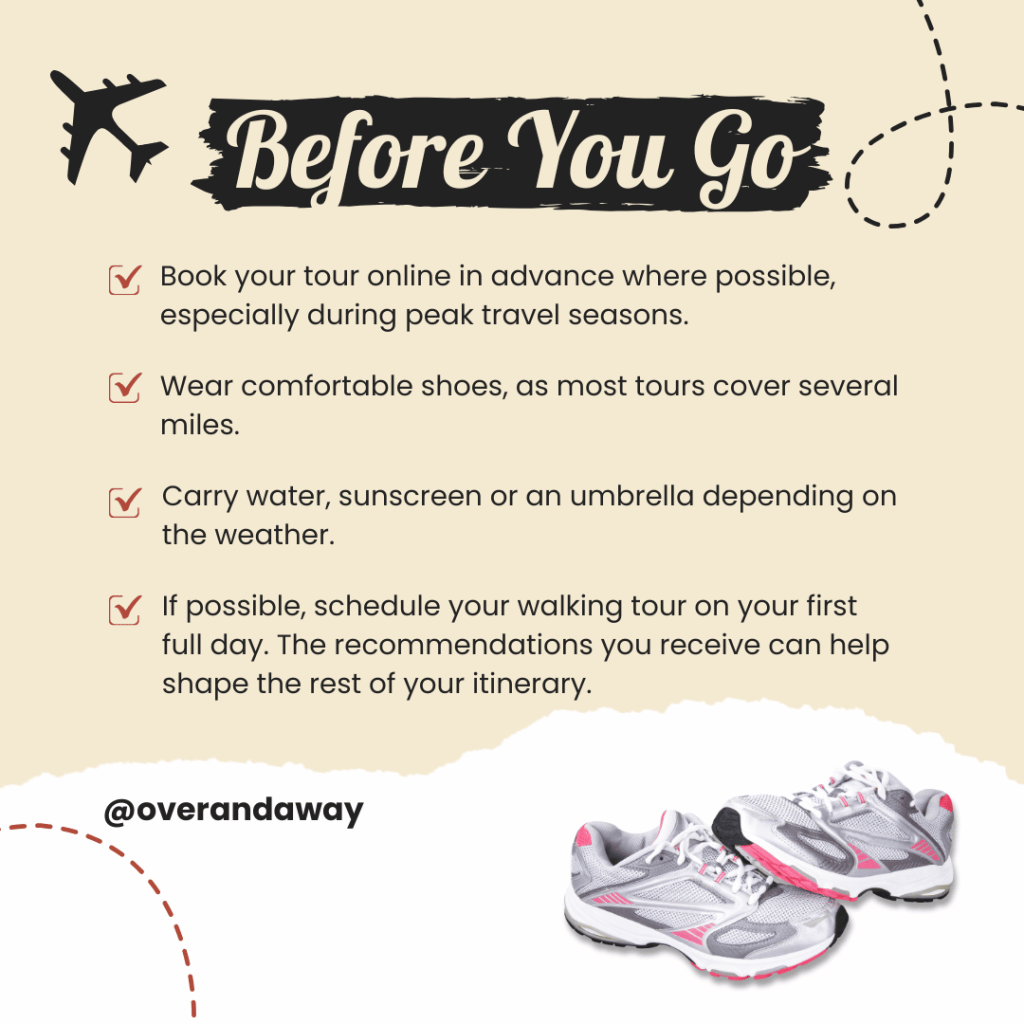
Final Thoughts
Free walking tours are one of the simplest ways to make a destination feel familiar in just a few hours. They combine local knowledge, history, practical advice and orientation in a way that’s difficult to replicate on your own. Walking is also one of the best ways to see a new city. Subway systems are great for their speed but you miss SO MUCH when you’re underground. Buses give you a better view but unless you’re stuck in traffic, you won’t get photos of many sights.
Of course, they’re not the only way to explore a city, and if you have a particular interest in food, architecture or history, you may also enjoy specialised paid tours. But if you’re visiting somewhere for the first time, I think a walking tour is one of the smartest investments you can make, even when the price is entirely up to you.
The next time you’re planning a city break, see if a free walking tour is available. You may find that those first few hours help you enjoy the rest of your trip even more.
Have you ever taken a free walking tour? I’d love to hear about your favourite one in the comments.
 Over & Away
Leave a comment